
Griffith Park (formerly called Rancho Los Feliz) was purchased by Colonel Griffith J. Griffith (His moms and dads must have disliked him) in 1882. He had made his money in coal mining, and he began an ostrich ranch on the residential or commercial property, where thirty of the birds lived. Though ostrich feathers were popular in styles at the time, Griffith’s primary interest in the farm was to draw individuals to his neighboring property holdings. People would visit and see the animals be plucked. (Which, simply in case it bothers you, doesn’t harm the ostriches.) Obviously Griffith (we can call him by both his first name and his last!), was something of an eccentric.
They were extremely dull, however people would bear with it because he had contributed so much cash. While on holiday with his other half, he became consumed by the idea that she was colluding with the Pope to toxin him therefore he shot her. (She wasn’t.) Through pure chance, he missed out on and she made it through, though disfigured and blind in one eye. At some point he believed he saw the ghost of Antonio Feliz, previous owner of the home, which stimulated him to provide some 3015 acres to the City of Los Angeles. Or at least, that’s what he claimed.


Los Angeles chose to utilize the residential or commercial property to build an observatory, planetarium and an amphitheater. After he left jail, he chose to donate one hundred acres to the study of flight, and the aerodrome was built. It had a runway (generally, it was an airport, however in the early times of flying, it was the leisure of those who could afford it), and eventually passed to the National Guard until the 1930s when it was determined that the military presence broke the terms of Griffith’s deed and after that it was ruined. After WW II, the location served to house returning soldiers.
The Ultimate Guide To Griffith Park In Los Angeles

When Griffith passed away in 1919, most of the property passed to the City of Los Angeles, and his cash, likewise left in trust to the city was used to money their jobs. Griffith Park now consists of two golf courses, Travel Town (where they have old trains), the Greek Amphitheater, The Observatory, the Hollywood Indication, the LA Zoo and the Museum of the American West (formerly the Gene Autry Museum), as well as great deals of open park space for games, horseback riding and treking. Now, when you delight in the numerous and differed satisfaction of the park, you can believe, not just does it have nothing to do with D.W.

And ostriches! Do not forget the ostriches. Photos from Wikipedia LAistory is our series that takes us on a journey to what came before to help us comprehend where we are today. Have a look at our other entries in the series: Echo Park’s Bonnie Brae House.
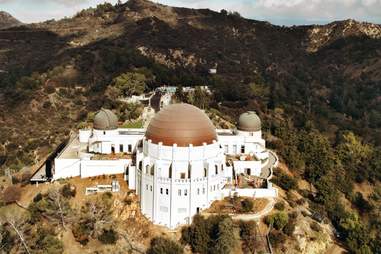
From a modest pueblo in the 18th Century, to a dominant financial and cultural force at the turn of the 21st Century, Los Angeles has taken a trip an accelerated roadway of growth. Following is a brief appearance at how the Department of Recreation and Parks helped shape the City of Los Angeles. The history of the Department of Entertainment and Parks is rich and diverse-stemming from the early days of Los Angeles. Colonel Felipe de Neve, Governor of the Spanish province of Alta California, officially founded Los Angeles on September 4, 1781 and produced the Plaza in the center of the city. In a generous mood throughout Christmas of 1896, Colonel Griffith J. Griffith used to donate 5 square miles of the Los Feliz Rancho to the City as a park. He said, “it should be made a place of leisure and rest for the masses, a resort for the rank and file, for the plain individuals …” What followed was the advancement of numerous more parks consisting of the original pueblo lands of the old plaza, Elysian Park, Pershing Square, and later Lincoln Park, Mac, Arthur Park, Echo Lake Park, and Hollenbeck Park. While these parks were available in the early years of the 20th century, there were no planned and supervised entertainment activities in the parks.